Hair Extension Length Chart: How to Pick the Perfect Length for Your Height
Every single time a friend asks me to help her order hair extensions, the first question is the same: "what length do I actually need?" It sounds simple until you're staring at a listing with six different inch options and zero idea what any of them will look like on your own body. That's exactly why I put together a hair extension length chart I actually trust, built from real fittings and real returns, not just a size guide pulled from a manufacturer's spec sheet.
The tricky part is that inches on a package don't translate directly to inches on your head. A 20-inch weft measured flat can sit anywhere from mid-back to waist depending on your natural hair length, your torso length, and how the wefts are installed. I've watched people order what should have been a dramatic waist-length set and end up with something that barely clears their bra strap, simply because nobody accounted for the 2-4 inches that get "lost" in blending and installation.
In this guide I'm walking through the full length range from a subtle 14-inch set all the way up to a dramatic 30-inch set, what each one actually looks like once it's installed, who tends to suit it, and how to cross-reference the chart against your own height and natural hair so you're not gambling on a return label.
Compare Hair Extension Length Chart options
Before you buy, compare a few listings side by side and check the measured length, weight in grams, and hair type so you're not comparing apples to oranges.
- Measured length, not "style length"
- Weight in grams per set
- Hair type: remy vs synthetic
- Return policy on worn wefts
Compare Hair Extension Length Chart on Amazon →
As an Amazon Associate, The Swag Hair may earn from qualifying purchases.
Key Takeaways
- 14-16 inch extensions blend into shoulder-length hair for a natural, everyday look
- 18-20 inch is the most universally flattering range for mid-back length
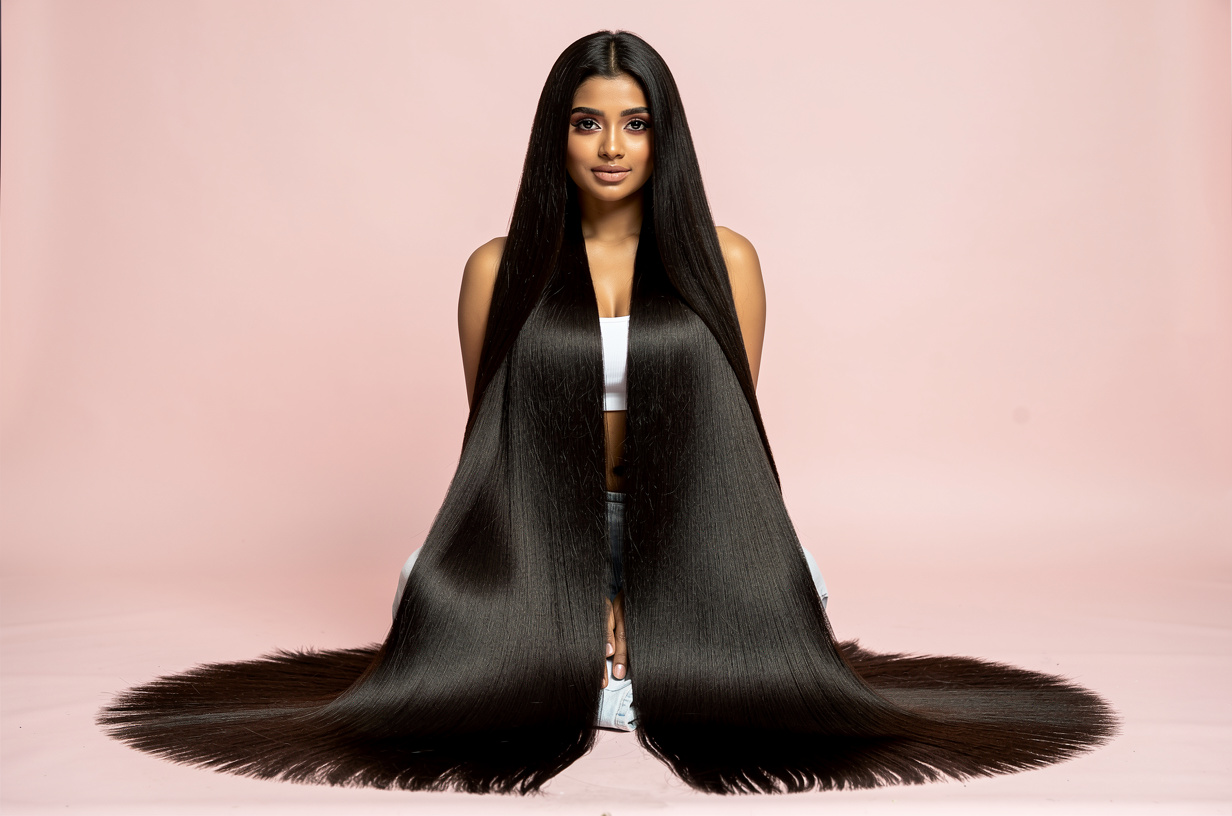
- 22-24 inch reads as dramatic waist-length and photographs beautifully
- 26-30 inch is a statement length best suited to special occasions or thicker natural hair
- Always measure your own hair first, then match it against a hair extension length chart before ordering
Quick Access
What I check before recommending Hair extension length chart
Before I recommend a length off any hair extension length chart, I check three things: my starting hair length, how much of that length is healthy versus damaged, and where I actually want the extensions to end. I measure my own hair dry, from the crown down to the last strand, because wet hair stretches and will throw off the whole calculation by an inch or two.
I also check how the seller measures their product. Some brands measure the weft from the top of the clip or track, others measure only the hair below the attachment point, and that gap alone can make an "18 inch" set behave like a 16 inch set once it's clipped in. Reading the product description closely, and checking a few customer photos with height listed, tells me far more than the number in the title ever will.
Who Hair extension length chart suits best
Shorter lengths in the 14-16 inch range suit anyone who wants extensions that look like their own hair grew overnight rather than something obviously added. This range works especially well if you're petite, have shoulder-length hair already, or you're extension-shy and want a first set that won't draw attention to itself.
The longer end of the chart, from 22 inches up, tends to suit people with longer torsos, thicker natural hair to blend into, or a specific dramatic look in mind for a shoot, wedding, or event. If your natural hair is very short or fine, jumping straight to 26-30 inches can look obviously non-natural at the root, so I usually suggest working up in stages instead.
Check Hair Extension Length Chart prices before you buy
Before you buy, compare a few listings side by side and check the measured length, weight in grams, and hair type so you're not comparing apples to oranges.
- Measured length, not "style length"
- Weight in grams per set
- Hair type: remy vs synthetic
- Return policy on worn wefts
Check today’s Amazon options →
As an Amazon Associate, The Swag Hair may earn from qualifying purchases.
Comparison guide
| Choice | Best for | Watch out for |
|---|---|---|
| 14-16 inch | Shoulder-to-collarbone length, subtle everyday blending | Can look too short if your natural hair is already past this length |
| 18-20 inch | Mid-back length, the most universally flattering range | Still needs blending if your natural hair is above shoulder length |
| 22-24 inch | Waist-length drama, photos, special occasions | Heavier sets can pull on fine or fragile hair |
| 26-30 inch | Maximum statement length, thicker natural hair to hide the join | Hardest to maintain and style without tangling at the ends |
How to choose the right look
Start by measuring your own hair, dry, from root to tip, and write that number down before you look at a single listing. Then decide how many inches past your current length you actually want to gain. Adding 4-6 inches over your natural length usually blends seamlessly, while jumping 10+ inches will always require more careful placement and styling to hide the transition point.
Next, hold a tape measure or ruler up against your body to visualize where 18, 20, or 24 inches would actually fall, since a picture on a model who's 5'8" looks completely different on someone who's 5'2". I do this every time before I buy, and it's saved me from ordering the wrong length more than once.
Buying checklist
| Check | Why it matters |
|---|---|
| Measured your dry hair length first | Wet hair stretches and gives an inaccurate baseline |
| Confirmed how the seller measures the weft | Some measure from the clip, others from below it |
| Held a ruler against your torso at the target length | Visualizes the real result better than a model photo |
| Checked hair type (remy human hair vs synthetic) | Affects how well the length holds up to heat and washing |
| Read reviews mentioning the reviewer's height | Gives a realistic comparison point for how the length falls |
Maintenance that keeps the result pretty
Longer extensions need more maintenance simply because there's more hair to keep tangle-free and more length for the ends to dry out. I always recommend a wide-tooth comb starting from the ends and working up, plus a light leave-in treatment on anything past 20 inches to keep the tips from turning into a matted mess after a few wears.
Sleeping with longer sets in a loose braid or a silk wrap makes a genuine difference in how long the set lasts before it needs a wash. I've had 24-inch sets last through dozens of wears simply because I was careful about friction overnight, versus similar sets that frizzed and tangled within a week from being left loose against a cotton pillowcase.
Common mistakes to avoid
The single biggest mistake I see is ordering purely off the inch number without checking it against personal height or natural hair length. Someone who is 5'1" and someone who is 5'9" will get a dramatically different finished look from the exact same 22-inch set, and the chart alone can't account for that without a bit of personal measuring first.
The second mistake is ignoring weight. A longer set that's also heavier in grams can pull at the root and cause real discomfort or even damage over time, especially on fine natural hair. I'd rather someone choose a slightly shorter length with proper weight distribution than max out the length chart and end up with headaches by the end of the day.
When to spend more and when to save
Where I'd spend more: on the actual hair quality at longer lengths, since cheap synthetic fiber tends to look duller and tangle faster the longer it is, and that damage is far more visible past 20 inches than it is on a short set.
Where I'd save: on trying a shorter, less expensive set first if you've never worn extensions before. It's a much smaller financial risk to test 16-18 inches and confirm you like the maintenance routine before committing to a longer, pricier set later on.
Final styling advice
Once your length is chosen and installed, I like layering the extensions in slightly with the natural hair rather than leaving a blunt, obvious line where they start. A few soft face-framing layers cut into both the natural hair and the extension ends make almost any length on this chart look more like it grew there.
For styling, looser waves tend to disguise the join better than pin-straight hair, especially at longer lengths where any gap between natural and added hair becomes more obvious under bright light. A quick low-heat wave with a 1.25-inch barrel is my go-to finishing step after installing anything past 20 inches.
Before you reach the FAQs, compare current Hair extension length chart options, reviews and prices side by side.
View Hair Extension Length Chart on Amazon →
As an Amazon Associate, The Swag Hair may earn from qualifying purchases.
FAQ
How do I know what length hair extensions I need?
Measure your dry natural hair length first, then decide how many inches past that you want to add. For most people, 4-6 inches over their current length blends the most naturally, while longer jumps need more careful placement.
Is 18 inch or 20 inch hair extensions longer?
20 inch is longer than 18 inch by two inches, which typically falls between mid-back and just above waist depending on your height. Both sit in the most universally flattering middle range of the length chart.
What length hair extensions look the most natural?
Extensions within 4-6 inches of your own natural hair length tend to look the most natural, since there's less of a visible gap to blend at the roots. Shorter, subtler lengths in the 14-18 inch range are usually the easiest to disguise.
Do hair extensions look shorter once they're installed?
Yes, extensions almost always read a little shorter once installed and blended with layers, because some length is used in the attachment method itself. It's worth sizing up slightly if you want a specific dramatic finished length.
How much longer will 24 inch extensions make my hair?
It depends entirely on your starting length, but 24 inch sets typically create a waist-length result on someone of average height with shoulder-length natural hair. Petite frames or shorter natural hair will see an even more dramatic length difference.
Final verdict
A hair extension length chart is genuinely useful, but only once you've cross-referenced it against your own height and natural hair length rather than trusting the inch number in isolation. My honest advice is to measure first, size slightly down if you're between two options, and prioritize hair quality over maximum length, especially if this is your first set. Get those basics right and almost any length on the chart will look like it's simply your own hair, just longer.