Best Hair Extensions for Thin Hair: 2026 Guide
Finding the best hair extensions for thin hair is not about buying the thickest set available. In fact, that is often exactly what makes extensions look bulky, visible or uncomfortable.
With thin hair, I care most about weight, attachment size, placement and how softly the ends blend. A smaller, lighter set can look far more expensive than a heavy set that your roots cannot hide.
Here is how I would choose extensions for thin or fine hair without making the hair look stressed.
Compare Best Hair Extensions For Thin Hair options
If you’re deciding on best hair extensions for thin hair, compare more than the first pretty result. Look at texture, comfort, maintenance, return policies and recent buyer photos before spending money.
- Texture, color and length match
- Comfort, tension and daily wear
- Care tools, storage and maintenance
- Recent reviews and return policy
Compare Best Hair Extensions For Thin Hair on Amazon →
As an Amazon Associate, The Swag Hair may earn from qualifying purchases.
Key Takeaways
- Lightweight extensions usually look better on thin hair.
- Clip-ins can work if the wefts are not bulky.
- Tape-ins can look flat and natural when placed correctly.
- Avoid very heavy sets that pull at the roots.
- A soft density match matters more than dramatic length.
Quick Access
- What thin hair needs
- Best extension types
- How many grams to choose
- Lengths that blend
- Mistakes to avoid
- Care tips
- FAQs
What Thin Hair Needs Most
Thin hair needs extensions that disappear, not extensions that dominate. The attachment area should be small enough to hide, and the weight should feel comfortable after several hours.
If you can feel pulling or see bumps near the crown, the set is probably too heavy, too high or too bulky for your density.
For thin hair, the goal is soft fullness — not a heavy curtain of hair your roots cannot support.
Best Types for Thin Hair
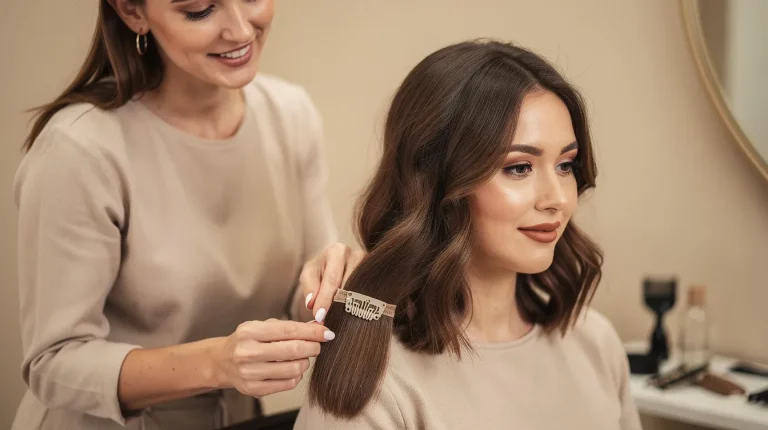
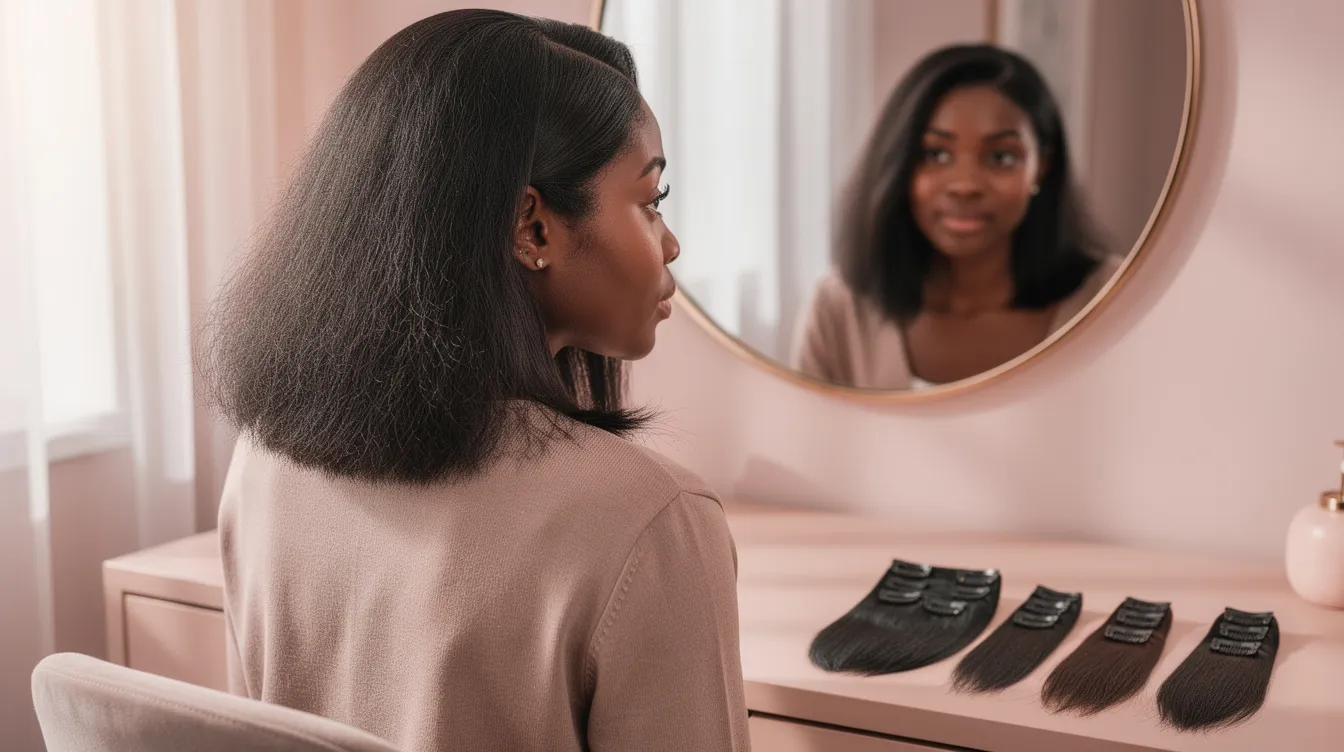
Lightweight clip-ins can be a good starting point because you can remove them and adjust placement. Look for flatter wefts and avoid placing clips too close to visible part lines.
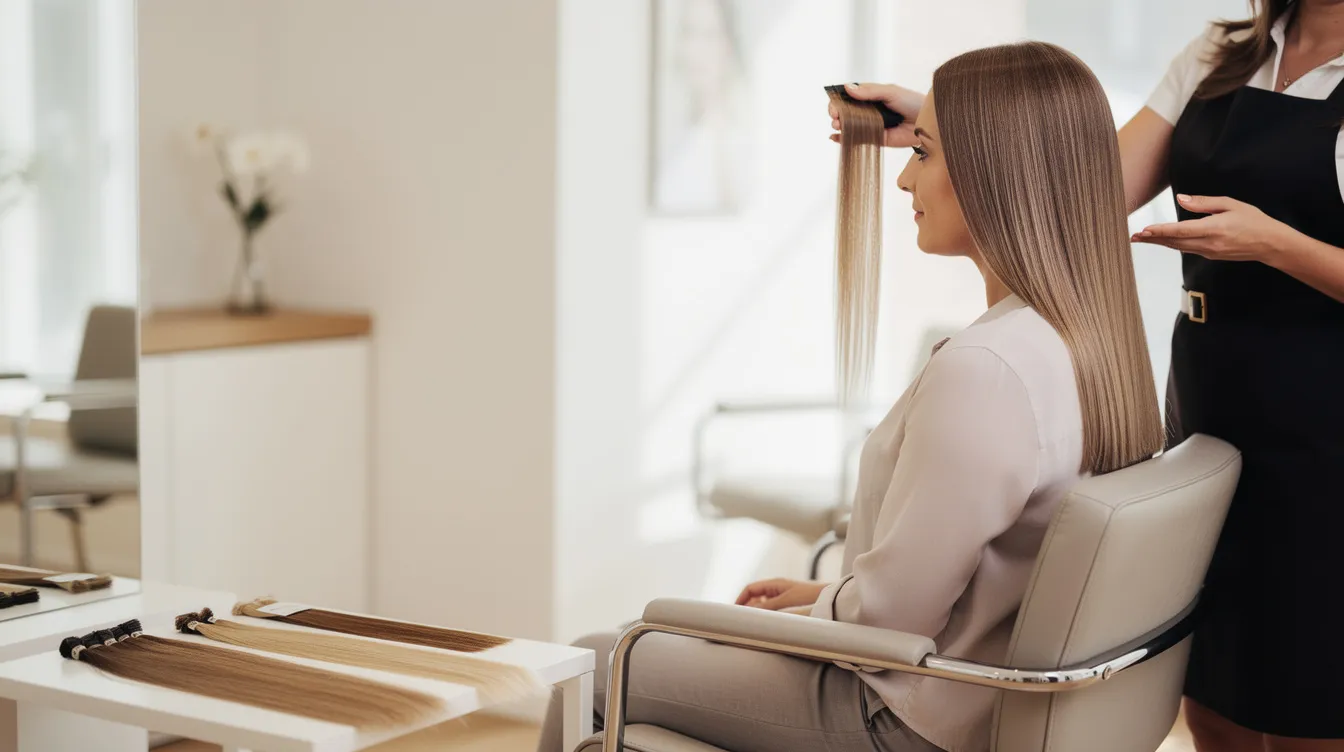
Tape-ins can also work well because they lie flatter than many clip-in wefts. But they need a careful stylist, because poor placement can show through fine hair.
| Extension Type | Thin Hair Rating | Why |
|---|---|---|
| Light clip-ins | Good | Removable and adjustable |
| Tape-ins | Good when installed well | Flat and natural-looking |
| Halo extensions | Sometimes good | No clips at the roots |
| Heavy sew-ins | Usually not ideal | Too much tension for many fine heads |
| Microlinks | Depends | Can be visible or stressful if hair is fragile |
How Many Grams Should You Choose?
The right grams depend on your length and current density. Many fine-haired beginners do better with moderate fullness rather than maximum grams.
If your natural hair is shoulder-length and fine, a very long heavy set may create a shelf where your real ends stop. That is why a realistic length and lighter density often blend better.
Best Lengths for Thin Hair
I usually prefer 14 to 18 inches for a first set on thin hair, depending on the starting length. It gives a visible change without making the contrast too obvious.
Longer lengths can work, but the ends need enough density and the top needs careful blending. If the extensions are long and thin at the bottom, they can make fine hair look even finer.
Colour and Root Blending
Thin hair exposes mistakes faster. A colour that is slightly off around the top can be obvious because there is less natural hair to cover the attachment.
Rooted, balayage or multi-tonal sets can sometimes blend better than a single flat shade. Always compare in daylight if possible.
Mistakes I Would Avoid
- Choosing maximum grams because the model photo looks full.
- Placing clips near the part line.
- Buying extensions much longer than your natural hair.
- Ignoring texture match.
- Sleeping in removable extensions.
Care Tips for Thin Hair Extensions
Brush gently, hold the roots or attachment area when detangling and avoid heavy product near the top. Lightweight leave-ins can help the ends, but too much product makes fine hair collapse.
For semi-permanent extensions, maintenance appointments matter. As your hair grows, attachments move down and can twist or pull if left too long.
| What To Check | Why It Matters | Practical tip |
|---|---|---|
| Weft thickness | Bulky wefts show easily | Choose flatter construction |
| Grams | Too much weight pulls | Start moderate |
| Length | Long hair reveals blending issues | Stay realistic first |
| Return policy | Colour mistakes happen | Check before opening |
Placement Matters More Than People Think
Thin hair gives you less coverage, so placement is everything. Extensions placed too high can peek through when the hair moves. Extensions placed too close to the hairline can show when you tuck your hair behind your ears or wear it half-up.
For clip-ins, I would keep the largest wefts lower and use smaller pieces near the sides only if they disappear easily. For tape-ins, I would want a stylist who understands fine hair and leaves enough natural hair above each tab to cover it.
The goal is not to hide a lot of attachment points. The goal is to use only what you need so the final look feels soft, light and believable.
Products I Would Avoid on Thin Hair Extensions
- Heavy oils near the roots or tape tabs.
- Sticky hairsprays that make fine hair clump.
- High heat without protection.
- Deep conditioners applied near adhesive bonds.
- Rough brushes that pull from the root.
How to Keep Thin Hair Looking Airy
Thin hair can quickly look overloaded if every section is packed with extra hair. I prefer leaving some natural movement around the face and keeping the heaviest pieces lower, where they create fullness without showing at the top.
A soft wave can also help thin hair blend because it breaks up the line between your real ends and the extensions. Straight styles can work, but they usually reveal blunt edges more easily.
Check Best Hair Extensions For Thin Hair prices before you buy
If you’re deciding on best hair extensions for thin hair, compare more than the first pretty result. Look at texture, comfort, maintenance, return policies and recent buyer photos before spending money.
- Texture, color and length match
- Comfort, tension and daily wear
- Care tools, storage and maintenance
- Recent reviews and return policy
Check today’s Amazon options →
As an Amazon Associate, The Swag Hair may earn from qualifying purchases.
Related Hair Guides
Use these related guides to compare options, avoid common mistakes and choose the best next step for your hair routine.
- Best Clip-In Hair Extensions for Beginners — Buying Guides, Clip-In Extensions
- How Many Grams of Hair Extensions Do You Need? — Hair Extension Guides, Human Hair Extensions
- Hair Extension Length Chart: How to Choose the Right Inches — Hair Extension Guides
- Clip-In vs Tape-In vs Sew-In Hair Extensions: Which Is Best? — Buying Guides, Clip-In Extensions
- Types of Hair Extensions Explained: Clip-In, Tape-In, Sew-In and More — Hair Extension Guides
Before you reach the FAQs, compare current best hair extensions for thin hair options, reviews and prices side by side.
View Best Hair Extensions For Thin Hair on Amazon →
As an Amazon Associate, The Swag Hair may earn from qualifying purchases.
FAQs
Can thin hair wear extensions?
Yes, but the extensions must be light, well matched and placed carefully. Heavy or bulky extensions are the problem, not extensions in general.
Are clip-ins bad for thin hair?
Clip-ins can be fine for occasional wear if they are lightweight and removed gently. Do not sleep in them.
Are tape-ins better for thin hair?
Tape-ins can look very natural because they lie flat, but they need professional placement and careful maintenance.
What length is best for thin hair?
Many people with thin hair look most natural with a moderate length increase, often around 14 to 18 inches for a first set.
Final Verdict
My personal take
For thin hair, I would choose comfort and blend over drama every time. A lighter set that disappears into your hair is more flattering than heavy hair that announces itself.
What I’d do next
Start with a lightweight option, compare shades in daylight and keep the first length realistic. Once you know what your hair can hide, you can experiment more confidently.