Thin to Thick Hair With Extensions: My Honest Buying Guide
I spent years thinking my hair was just "naturally thin" and there was nothing I could do about it besides more volumizing mousse and hoping for the best. Then I tried extensions for the first time before a wedding, and it was genuinely the first time I saw my hair look thick in a photo without a filter doing the work. Going thin to thick hair with extensions isn't about hiding your real hair – it's about giving it more strands to work with, which is the one thing no amount of product can fake.
The tricky part is that not every method delivers real density. Some extensions are built for length and barely add width at the roots, which is exactly where fine hair needs the most help. Others are heavy, bulky, or attach in a way that stresses already-fragile strands, which defeats the purpose entirely. I've tested clip-ins, tape-ins, wefts, and halos on my own thin hair, and the difference between "looks thick" and "looks like I'm wearing a hair accessory" almost always comes down to placement, weight, and how well the color matches at the root.
In this guide I'm walking through exactly what I check before recommending an extension method for thin hair, which options actually build volume versus just length, and how to keep the result looking like your own thick hair instead of something bolted on. If you've been Googling thin to thick hair with extensions and getting overwhelmed by options, this is the breakdown I wish I'd had before my first try.
Compare Thin To Thick Hair With Extensions options
Before you buy, compare weight, weft construction, and color-match options side by side so you don't end up with extensions that look thin themselves.
- Check weft weight in grams per set
- Match shade to your roots, not ends
- Confirm the attachment suits fine hair
- Read return policy before first cut
Compare Thin To Thick Hair With Extensions on Amazon →
As an Amazon Associate, The Swag Hair may earn from qualifying purchases.
Key Takeaways
- Volume comes from weft density and placement, not just extra length
- Tape-ins and wefts add the most root volume for thin hair
- Clip-ins are the lowest-commitment way to test thick hair before buying more
- Lightweight, well-matched extensions protect fragile strands better than heavy sets
- Color-matching at the root line matters more than matching at the ends
Quick Access
What I check before recommending Thin to thick hair with extensions
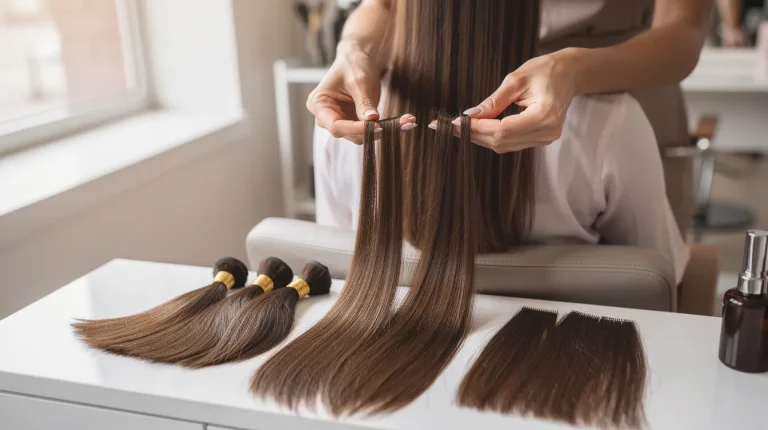
The first thing I look at is weft weight, because this is the single biggest factor in whether extensions actually make thin hair look thick or just longer. A set that's too light will disappear into your natural hair and barely change how it looks in photos, while a set that's too heavy will pull on your scalp and actually accelerate breakage over time. For genuinely thin hair, I look for sets in the 100-160 gram range for a full head, split across enough wefts that the weight is distributed rather than concentrated in two or three thick pieces.
Next I check the weft construction itself – hand-tied wefts lie flatter against the scalp and are far less noticeable at the root than machine-wefted tracks, which tend to have a visible ridge of extra thickness right where your part is most likely to show it. For anyone with fine or thin hair, that ridge is the difference between extensions that blend and extensions that announce themselves. I also look at how the hair is sourced and processed, since remy human hair with the cuticle intact tangles less and holds a blend with your natural texture much longer than non-remy or heavily processed synthetic blends.
Who Thin to thick hair with extensions suits best
Thin to thick hair with extensions works best for people whose hair is fine in texture but reasonably healthy – if your scalp is fragile, recently color-damaged, or you're dealing with active hair loss, I'd talk to a stylist before committing to anything semi-permanent like tape-ins or sew-ins. Clip-ins are the safest starting point in that situation because there's zero ongoing tension on the scalp and you can remove them the moment your hair needs a break.
If your hair is fine but strong, and you mainly want more visible density for everyday wear or special occasions, tape-ins or a well-placed weft set give the most consistent thick-hair look with the least daily effort. I've found that people who wear their hair down most of the time get the most value from extensions, since updos and ponytails need extra attention to hide the attachment points on thin natural hair.
Check Thin To Thick Hair With Extensions prices before you buy
Before you buy, compare weight, weft construction, and color-match options side by side so you don't end up with extensions that look thin themselves.
- Check weft weight in grams per set
- Match shade to your roots, not ends
- Confirm the attachment suits fine hair
- Read return policy before first cut
Check today’s Amazon options →
As an Amazon Associate, The Swag Hair may earn from qualifying purchases.
Comparison guide
| Choice | Best for | Watch out for |
|---|---|---|
| Clip-in extensions | Testing volume before committing, occasional wear | Can add bulk at the root if wefts aren't thin and well-placed |
| Tape-in extensions | Consistent daily volume with minimal upkeep | Reapplication every 6-8 weeks; not ideal for very fine, fragile hair |
| Sew-in wefts | Maximum density and longest wear time | Heaviest option; needs a skilled stylist to avoid tension on thin hair |
| Halo extensions | Instant thickness with zero attachment to strands | Can shift or show at the crown if not fitted to your part |
How to choose the right look
I start by being honest about how much daily effort I want to put in. Clip-ins take two minutes longer to put on but need zero upkeep between wears, while tape-ins and sew-ins need salon visits but give me thick hair every single day without thinking about it. If you're extension-curious but not ready to commit, clip-ins let you find your ideal shade and volume level before spending more on a semi-permanent set.
After that, I match the method to how fragile my hair feels that season. After a color change or a stretch of heat styling, I lean toward clip-ins or a lightweight halo so there's no added tension while my hair recovers. When my hair is in a healthier stretch, tape-ins give me the most natural thick-hair result for the least daily maintenance, which is really what most people mean when they search for thin to thick hair with extensions in the first place.
Buying checklist
| Check | Why it matters |
|---|---|
| Total weft weight for a full set | Too heavy stresses fine hair; too light won't read as thick |
| Hand-tied vs machine-tied wefts | Hand-tied lies flatter and hides better at thin roots |
| Remy human hair with intact cuticle | Blends and moves like natural hair, tangles less |
| Shade match at the root, not just the length | Root color is where the eye notices a mismatch first |
| Return or exchange policy | Color and thickness read differently in person than online |
Maintenance that keeps the result pretty
Once extensions are in, brushing technique matters more than almost anything else for keeping thin hair looking thick instead of tangled. I always brush from the ends up, holding the section above where I'm brushing so there's no pulling at the weft or the root. A wide-tooth brush or a loop brush made for extensions is worth the small cost – regular brushes are more likely to snag at the attachment point and work threads loose over time.
Washing is the other place I see people go wrong. I wash extensions less often than I used to wash my natural hair alone, using sulfate-free shampoo and keeping conditioner away from the tape or weld line so the bond stays secure. Sleeping with hair in a loose braid or low ponytail keeps everything from matting overnight, which matters even more with added extensions since there's simply more hair that can tangle together.
Common mistakes to avoid
The biggest mistake I made early on was buying a set that was too long for the volume I actually wanted. Length draws the eye and makes hair look thinner by comparison if the width isn't there to match, so I now prioritize a shorter, denser set over a longer, sparser one whenever I'm shopping for thickness rather than length. If you want both, it's usually smarter to buy two lighter sets and layer them than one heavy one that stresses your scalp.
The second mistake is skipping the color-blend test in daylight. Extensions that look like a perfect match under indoor lighting can read noticeably different outside, especially at the root where your natural regrowth shows first. I always hold a strand up against my hairline near a window before committing, and if it's even slightly off, I ask about a custom blend rather than assuming it'll fade into place.
When to spend more and when to save
Where I spend more: the weft quality and hair sourcing. Remy human hair extensions cost more upfront but last through many more wash-and-wear cycles without matting, tangling, or losing their blend with my natural texture, which makes them cheaper per wear than a budget set I'd replace twice as often.
Where I save: styling tools and accessories. A basic loop brush and a sulfate-free shampoo do the job just as well as pricier salon-branded versions marketed specifically for extensions. I'd rather put the budget toward better hair and keep the maintenance kit simple.
Final styling advice
For the thickest possible finish, I place extensions in sections rather than one continuous row, starting just above the ear and working up so the weight builds gradually instead of sitting in one dense clump at the crown. A light backcombing at the root before clipping in also helps blend the transition line, especially for anyone going from noticeably thin hair to a much fuller look in one sitting.
Curling or waving the extensions along with your natural hair afterward – rather than styling them separately – is what makes the blend convincing. I always do a final pass with a large-barrel curler over the whole head once everything is in place, which softens any visible line between natural and added hair and makes the volume look like it's genuinely all yours.
Before you reach the FAQs, compare current Thin to thick hair with extensions options, reviews and prices side by side.
View Thin To Thick Hair With Extensions on Amazon →
As an Amazon Associate, The Swag Hair may earn from qualifying purchases.
FAQ
Can extensions really make thin hair look thick?
Yes, when the weft weight, construction, and color match are right – the added strands genuinely increase visible density rather than just length. The mistake is choosing a set built for length instead of volume.
What's the best extension type for very fine hair?
Clip-ins or lightweight halo extensions are usually safest for very fine or fragile hair since there's no ongoing tension on the scalp. Tape-ins work well too if your hair is fine but structurally healthy.
How many grams of extensions do I need for a full, thick look?
Most people with thin hair see a real difference starting around 120-160 grams for a full head, split across enough wefts to distribute the weight evenly rather than concentrated in a few thick pieces.
Will extensions damage my thin hair further?
Well-fitted, appropriately weighted extensions shouldn't damage healthy thin hair, but sets that are too heavy or attached too tightly can add stress and breakage over time. Choosing lighter, hand-tied wefts and giving your scalp breaks between wears helps protect it.
How do I keep extensions from looking obviously fake?
Match the shade at your root line specifically, choose hand-tied wefts that lie flat, and blend the transition with a final curl over the whole head. Layering thickness gradually from the ear up also hides the line between natural and added hair.
Final verdict
Going thin to thick hair with extensions changed how I think about my hair completely – it's not about faking thickness, it's about giving fine hair the extra strands it never had to begin with. If you take the time to check weft weight, construction, and color match before buying, the result reads as your own thick hair rather than an obvious add-on. Start with clip-ins if you're unsure, move to tape-ins or a sew-in once you know what volume you actually want, and always prioritize protecting your natural hair underneath – that's what keeps the thick look sustainable long after the first wear.